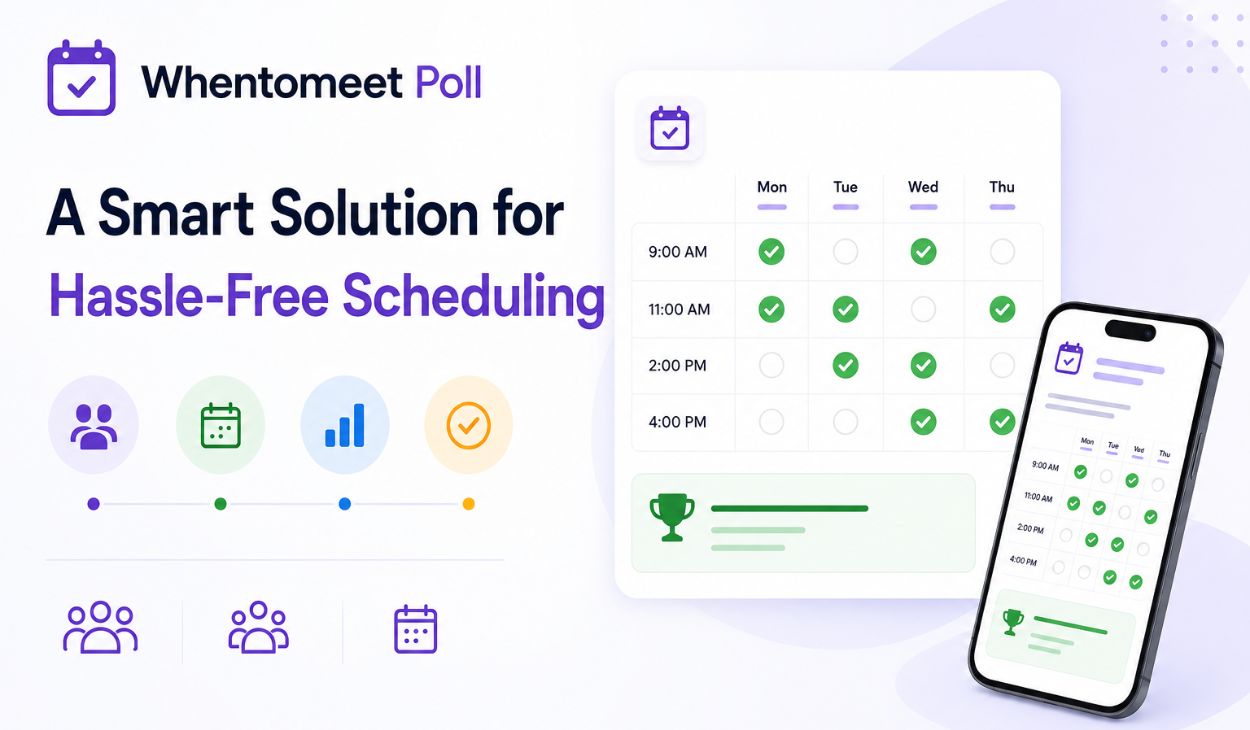
Whentomeet Poll A Smart Solution for Hassle-Free Scheduling
Finding a time that suits everyone often feels like solving a puzzle with missing pieces. Different schedules, time zones, and personal commitments can quickly turn simple planning into a frustrating experience. A Whentomeet poll makes this process much easier by allowing everyone to share their availability in one place. Instead of endless email chains and group chats, participants can quickly see common time slots and agree on a meeting without unnecessary delays. Its simple approach has made it a trusted solution for students, families, friends, and professional teams looking for stress-free scheduling.
What Is a Whentomeet Poll?
A Whentomeet poll is an online scheduling tool designed to help groups discover overlapping availability. Users create an event, select dates and times, and share a unique link with participants who can mark when they are free. The platform displays all responses in a visual grid, making it easy to identify suitable meeting times. Since participants do not need to create accounts, the process remains fast and convenient. Whether organizing a study group, project meeting, or social gathering, the tool simplifies coordination and saves valuable time.
Why Whentomeet Remains Popular
Despite the emergence of many advanced scheduling platforms, Whentomeet continues to attract users because of its simplicity. People appreciate tools that solve problems without introducing unnecessary complexity. The platform does not require lengthy registration or complicated setup procedures, making participation effortless. Its straightforward design appeals to users of all technical skill levels. Because it focuses solely on scheduling availability rather than offering dozens of additional features, many people find it easier and faster than more sophisticated alternatives.
How a Whentomeet Poll Works
The platform relies on a color-coded grid that visually displays participant availability. Users select time blocks when they are available, and the grid gradually becomes darker in areas where schedules overlap. This system allows organizers to identify suitable meeting times without manually comparing responses. Participants can update their availability whenever plans change, ensuring information remains accurate. By turning scheduling into a visual process, Whentomeet eliminates confusion and helps groups reach decisions more efficiently.
How to Create a Whentomeet Poll
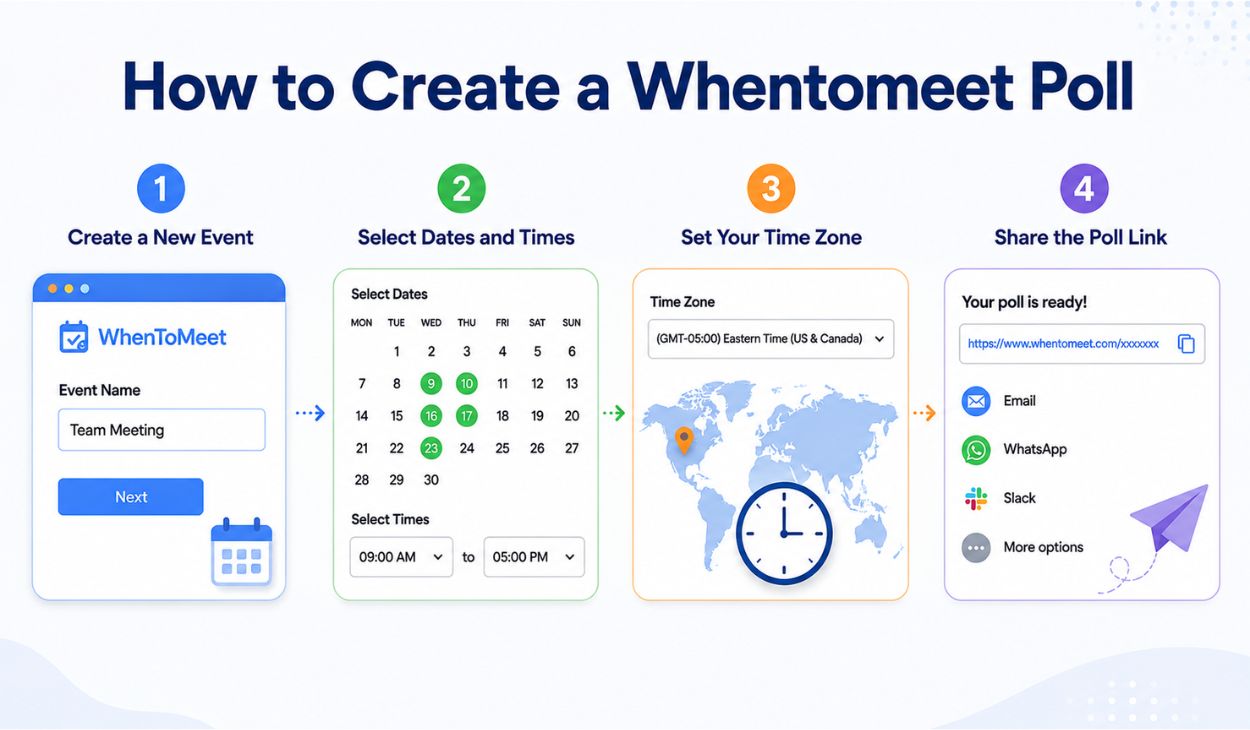
Creating a poll requires only a few minutes and involves a simple sequence of steps. Organizers can customize event details, choose dates, define time ranges, and share the poll with participants immediately. Because there are no complicated settings, the process remains user-friendly for both personal and professional events. Whether coordinating weekly team meetings or family gatherings, setting up a poll is straightforward and accessible. The platform’s simplicity contributes significantly to its widespread popularity.
Create a New Event
The first step involves visiting the website and entering a title for the event. This title could represent a meeting, birthday celebration, class project, or study session. Organizers can easily identify the event later based on its name. A clear event title helps participants understand the purpose of the poll before submitting their availability. Starting with a descriptive name also improves organization when multiple polls are being managed simultaneously.
Select Dates and Times
Choosing appropriate dates and time ranges is essential for obtaining accurate responses. Organizers can narrow the options to specific days and hours to avoid overwhelming participants with unnecessary choices. Focusing on realistic scheduling windows increases the chances of finding suitable overlaps. Clear date selections also prevent confusion among group members. Proper planning during this stage contributes greatly to a smoother scheduling experience.
Set Your Time Zone
Time zones become especially important when participants live in different regions or countries. Selecting the correct time zone ensures everyone interprets availability using the same reference. Without proper time settings, misunderstandings can easily occur and lead to missed meetings. Fortunately, Whentomeet provides time zone support to improve accuracy. This feature is particularly useful for remote teams and international collaborations.
Share the Poll Link
Once the event setup is complete, the platform generates a unique link that can be shared instantly. Organizers may distribute the link through email, messaging applications, or social media channels. Participants simply open the link and begin marking their availability. Since no account creation is required, responses can be collected quickly. This effortless sharing system contributes to higher participation rates and faster scheduling decisions.
How to Fill Out Availability
Participants only need to open the shared link and enter their names before selecting available time slots. The visual interface allows users to highlight suitable periods with just a few clicks. If schedules change later, availability can be updated without difficulty. The platform automatically saves modifications, reducing the risk of outdated information. This flexibility makes Whentomeet particularly convenient for people with busy and unpredictable schedules.
Understanding Poll Results
One of the most appreciated features of Whentomeet is its easy-to-read results display. Darker sections of the grid represent times when more participants are available. Organizers can hover over specific blocks to identify who can attend during each period. This eliminates guesswork and simplifies decision-making. Instead of manually comparing responses, users can visually identify the best meeting time within seconds.
Key Features of Whentomeet Poll

Whentomeet focuses on practical functionality while maintaining a simple interface. These features make the platform efficient and user-friendly for different kinds of groups.
- Visual availability grid for quickly identifying shared schedules.
- No mandatory accounts, making participation easier.
- Automatic saving of availability changes.
- Time zone support for remote and international users.
- Unique poll links for easy sharing.
- Editable responses when schedules change.
These capabilities help streamline meeting coordination without overwhelming users with unnecessary complexity.
Benefits of Using Whentomeet
Using a Whentomeet poll saves time and minimizes frustration associated with traditional scheduling methods. Instead of exchanging dozens of messages, groups can collaborate through a single interface. The platform encourages faster decisions and reduces scheduling conflicts. Because it is free and accessible, people can use it for everything from casual gatherings to business discussions. Its efficiency makes it an excellent solution for individuals and organizations seeking simple coordination tools.
Whentomeet vs Doodle Poll
Both platforms help users coordinate schedules, but they target slightly different audiences. Whentomeet emphasizes simplicity, while Doodle provides additional business-oriented capabilities. Choosing between them depends largely on scheduling needs and personal preferences. Casual users often appreciate Whentomeet’s straightforward design, while professionals may value Doodle’s integrations and automation tools. Understanding these differences helps users select the platform that aligns best with their goals.
Ease of Use
Whentomeet offers a highly streamlined experience that requires minimal effort. Participants can immediately submit availability without creating accounts or learning complex features. This simplicity makes it ideal for users with varying technical backgrounds. Doodle also provides an intuitive interface, but additional features may introduce more steps. For quick scheduling, many people prefer the straightforward nature of Whentomeet.
Features and Integrations
Doodle includes integrations with calendars, reminders, notifications, and automation features that support professional workflows. These tools can improve productivity for businesses managing frequent appointments. Whentomeet intentionally avoids such complexity and focuses solely on availability coordination. This minimalist approach appeals to users who prioritize speed over advanced functionality. Both platforms excel in different areas depending on user requirements.
Pricing Comparison
One major advantage of Whentomeet is that it remains completely free. Users can create and participate in polls without subscription fees. Doodle offers a free version, but several advanced capabilities require premium plans. Budget-conscious individuals often appreciate the unrestricted access available through Whentomeet. Organizations seeking additional features may find value in Doodle’s paid options.
| Feature | Whentomeet | Doodle |
| Free Usage | Yes | Limited |
| Account Required | No | Optional |
| Calendar Integration | No | Yes |
| Automated Reminders | No | Yes |
| Best For | Simple Scheduling | Professional Use |
Which One Is Better?
The answer depends entirely on scheduling priorities. Users who want a quick and uncomplicated solution usually prefer Whentomeet. Professionals managing recurring meetings may benefit from Doodle’s advanced tools. Neither platform is universally better because each serves different audiences. Evaluating personal needs, budget, and desired features will help determine the most suitable option.
Who Should Use Whentomeet?
Whentomeet works particularly well for students, families, friends, volunteer groups, and small teams. Its simplicity removes barriers that often discourage participation in scheduling activities. People who organize occasional meetings without requiring advanced integrations will appreciate its ease of use. Community organizations and clubs can also benefit from its accessible design. Because it is free and straightforward, it remains a versatile choice for many users.
Is Doodle Better for Professionals?
For businesses managing client appointments and recurring meetings, Doodle may provide additional advantages. Features such as calendar synchronization, reminders, and automation support structured workflows. These tools help professionals maintain efficiency and avoid scheduling conflicts. However, for basic meeting coordination, Whentomeet remains highly effective. The right choice ultimately depends on the complexity of scheduling requirements.
How to Choose the Right Scheduling Platform
Selecting the ideal platform begins with understanding your specific needs. Factors such as group size, meeting frequency, integration requirements, and budget should guide the decision. Casual users may prioritize simplicity and accessibility, while organizations may require automation and calendar connectivity. Evaluating these aspects carefully helps avoid unnecessary expenses and complexity. A platform that matches actual requirements often delivers the best experience.
Common Limitations of Whentomeet
Although highly useful, Whentomeet does have certain limitations compared with advanced scheduling software. It does not include calendar synchronization, automated notifications, or enterprise-level collaboration features. Businesses with complex workflows may require more comprehensive tools. Some users may also prefer built-in reminder systems to improve attendance. Understanding these limitations helps users set realistic expectations before relying on the platform.
Best Practices for Accurate Scheduling
Successful scheduling depends not only on the platform but also on participant cooperation. Organizers should share polls early and encourage prompt responses. Clear date ranges and realistic time options improve the chances of finding overlaps. Participants should update availability whenever circumstances change. Following these practices leads to more reliable results and smoother coordination.
Alternatives to Whentomeet Poll
Several scheduling tools offer similar functionality with varying degrees of complexity. Popular alternatives include Doodle, Calendly, Microsoft FindTime, and Google Calendar appointment scheduling. Each platform provides unique strengths depending on user requirements. Some focus on professional automation, while others prioritize simplicity. Comparing features, pricing, and integrations helps users identify the best option for their specific needs.
Conclusion
A Whentomeet poll remains one of the easiest and most practical ways to coordinate people with different schedules. Its visual grid, quick setup process, and free accessibility make planning meetings far less stressful. Users appreciate its simplicity because it focuses on solving one problem exceptionally well. Whether arranging study sessions, family events, or team discussions, the platform offers an efficient and reliable solution. For anyone seeking straightforward scheduling without unnecessary complications, Whentomeet continues to be an excellent choice.
FAQs about Whentomeet Poll
What is a Whentomeet Poll?
A Whentomeet Poll is an online scheduling tool that helps groups find shared meeting times.
Is Whentomeet free to use?
Yes, Whentomeet is completely free for both organizers and participants.
Do I need an account to participate?
No, participants can usually submit availability without creating an account.
Can I edit my availability later?
Yes, users can return and modify their availability whenever needed.
Does Whentomeet support multiple time zones?
Yes, the platform supports time zones to improve scheduling accuracy.
